#Anthropic #Claude #IPO #AIFunding #AIInvesting #VentureCapital #AIValuations #AIInfrastructure
Wall Street is starting to ask AI labs the same question it eventually asks everyone else: where's the money?
That question is now landing squarely on Anthropic's desk.
According to reporting from The Wall Street Journal, the company is meeting with potential investors ahead of a possible initial public offering, offering reassurances about its growth and how it plans to navigate a growing list of challenges facing the AI industry.
The potential scale is enormous. The Journal reports that Anthropic is currently valued at around $965 billion, putting a potential listing in a category normally reserved for the biggest technology companies in the world.
But going public means facing a much less forgiving audience than the private markets that have funded the AI boom so far.
Why Investors Are Getting Nervous
Private investors have rewarded AI companies for rapid growth, technical leadership and the prospect of enormous future markets.
Public investors tend to ask harder questions about margins, cash generation and how sustainable that growth actually is.
Anthropic is facing all three.
The company has spent heavily on computing capacity to develop and run its Claude models, while the broader AI industry is committing enormous amounts of capital to data centers and advanced chips.
The Journal reports that investors meeting with Anthropic executives have been asking about several emerging risks, including cheaper AI systems from China, political tensions and growing resistance to new data-center construction in the U.S.
Those concerns go beyond Anthropic itself.
The economics of the entire AI industry increasingly depend on an assumption that demand for AI services will continue growing rapidly enough to justify the extraordinary infrastructure spending required to support them.
Claude Code Changes the Conversation
Anthropic's recent growth has been helped by the popularity of Claude Code, its coding-focused AI tool.
That success has helped position Anthropic as one of the leading contenders in the frontier AI race, putting it increasingly into direct competition with OpenAI and other major model developers.
The company is also telling investors that Chinese competition may not fundamentally undermine its growth strategy.
According to the Journal, Anthropic executives have emphasized that the company remains focused on developing the most capable AI models available.
The argument is essentially that customers will continue to pay for the strongest systems, even if cheaper alternatives become increasingly capable.
That is a critical assumption for the company's valuation.
That argument is being tested in real time as Chinese developers demonstrate that capable AI systems can sometimes be delivered at substantially lower cost.
The Data Center Problem
The other major challenge is physical.
AI models require enormous amounts of computing infrastructure, and that infrastructure is becoming increasingly expensive and politically contentious.
The Journal reports that growing opposition to data-center construction is one of the issues investors have raised with Anthropic.
That's significant because the company's growth doesn't happen entirely inside a software environment.
Every additional user, enterprise deployment and AI workload ultimately requires computing capacity somewhere.
That means Anthropic's long-term economics are tied not only to model demand, but to the availability and cost of GPUs, data centers, electricity and other infrastructure.
The AI industry is therefore facing an unusual situation: companies can have extraordinary demand for their products while simultaneously becoming more capital-intensive as they scale.
A Test Case for the AI Market
Anthropic's eventual IPO could become a major test of whether public-market investors are prepared to value frontier AI companies on the same extraordinary assumptions that have driven private-market valuations.
The Journal notes that the price Anthropic ultimately sets, along with how the stock performs afterward, could influence how investors value other leading AI developers.
That makes this bigger than one company's listing.
Trillions of dollars in AI spending are being committed on the assumption that demand will continue rising rapidly. If investors give Anthropic a huge valuation and the stock performs well, it could reinforce that spending cycle.
If the market instead demands a significant discount, the consequences could reach far beyond Anthropic.
Private AI companies may find themselves facing tougher fundraising conditions, lower valuation multiples and much greater pressure to demonstrate actual revenue and sustainable economics.
What This Means for Miami
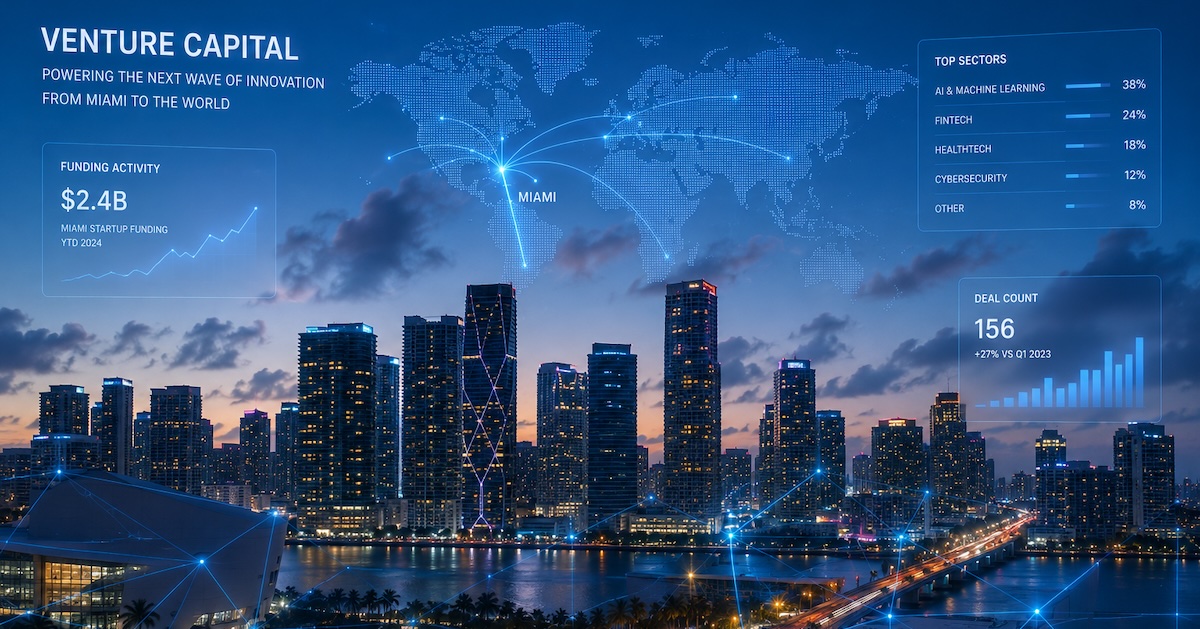
Miami's AI ecosystem is built more around applied AI, fintech and enterprise adoption than frontier-model development, but Anthropic's potential IPO still matters locally.
South Florida investors with exposure to AI through venture funds, family offices or public markets will be watching closely because Anthropic's valuation could become a benchmark for other AI companies raising capital.
A strong public-market debut could reinforce confidence in enterprise AI spending and benefit Miami startups building products on top of foundation models.
A weaker reception would send the opposite signal.
For Miami founders, the lesson may ultimately be less about Anthropic itself and more about what investors are demanding from AI companies at this stage of the cycle.
The era when technical capability alone could justify almost any valuation may be coming to an end.
Wall Street is going to want to know how the numbers work.