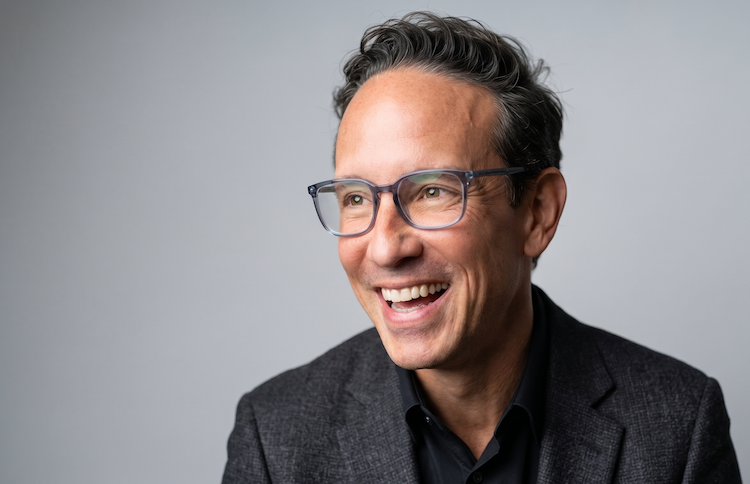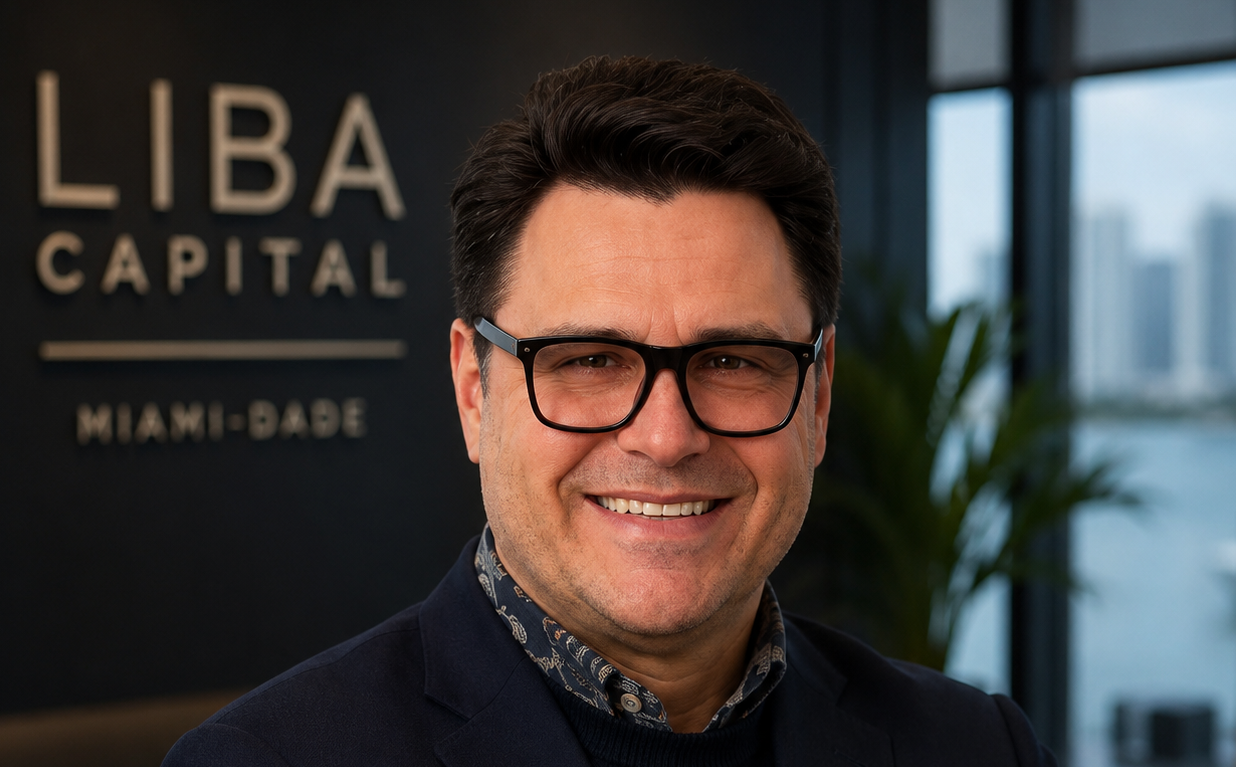
Akos Balogh says institutional intelligence has no credibility if it only remembers successes. So his company plans to publish its misses too.
Balogh is co-founder of Miami-based LIBA SI, which builds a decision intelligence system. He also co-founded LIBA Capital, its first real estate deployment.
This is part of a peer-to-peer series of conversations MAIN runs exclusively with Miami’s AI founders, investors and leaders. We asked Balogh a handful of questions in writing. His answers, lightly edited for length, are below.
When will LIBA publish a closed loop, and will it publish a miss?
Ocean 18 is a property LIBA reviewed and passed on. The public record ends with a price cut and the building still listed.
“Ocean 18 isn’t a victory claim. It documents why we passed. A price reduction doesn’t prove we were right. We’ll publish closed-loop records when actual operating results can be compared with the original forecasts. And yes, that includes misses. If the numbers prove us wrong, that belongs in the record too. Institutional intelligence has no credibility if it only remembers successes.”
Has a principal ever overridden a clean AI review, only for the outcome to prove the machine right?
“We don’t have a verified case of that exact scenario to publish yet, and I won’t manufacture one. AI informs decisions; it doesn’t make them. A named principal remains accountable. Our system is designed to preserve the original analysis, the human override and the reasoning behind it. The objective isn’t to prove the machine right. It’s to make every decision accountable.”
As LIBA Capital scales from 20 units toward 80 and 160, what breaks first?
“Review discipline. Technology scales faster than human judgment. At 20 units, you can remember almost every decision. At 160, you need a system that remembers for you: what was forecast, who approved it and what actually happened. We’re building LIBA SI to preserve that discipline as organizations grow.”
Is Miami your market, your laboratory or your headquarters?
“All three. Miami is where we operate, invest and test our technology against real economic decisions. LIBA Capital is our first deployment, not our market limit. We’re building enterprise decision infrastructure that can serve institutions well beyond real estate and Miami.”
What does Miami have that mature technology markets lack, and what is still missing?
“Miami has entrepreneurial energy, international capital and proximity to real industries. What it needs is deeper engineering talent and research infrastructure. Carnegie Mellon’s planned Miami campus is an important step. The combination of academic excellence, capital and entrepreneurship could be transformative.”
MAIN covered Carnegie Mellon’s $3 billion Griffin gift for Wynwood, which funds a $2 billion Miami campus.
Is Miami’s AI talent pool deep enough? Where would you find five senior AI engineers tomorrow?
“I’d recruit globally, starting with our established engineering connections in Budapest and expanding wherever the best talent is. We’re building an international technology company headquartered in Miami. Talent quality matters more than geography, but strong technical leadership and accountability are non-negotiable.”
What’s the most overhyped claim about Miami AI, and what’s the most underrated opportunity?
“The hype is believing that integrating an AI model automatically creates a defensible business. The real opportunity is applying AI to industries where decisions carry financial consequences: real estate, finance, healthcare and logistics. The value isn’t in generating answers. It’s in improving outcomes.”
What is the market mispricing in Miami AI companies?
“Too much value is placed on impressive demos and too little on execution, customer economics and recurring revenue. I look for businesses that solve expensive problems and become difficult to replace. Technology gets attention. Sustainable economics creates enterprise value.”
What does Miami AI look like in 2030, and what single thing could most change its trajectory?
“By 2030, Miami could become a major center for applied enterprise AI. Carnegie Mellon’s planned expansion could be a catalyst, but universities alone don’t create ecosystems. Successful companies do. Miami needs founders who build enduring businesses, develop local engineering talent and generate real revenue. That’s how an ecosystem matures.”
Akos Balogh is Co-Founder of LIBA Capital and LIBA SI, Miami-based companies applying decision intelligence to real estate. More at www.getliba.si.
Sources:
- Akos Balogh, responses to MAIN questions, October 29, 2026
- MAIN: Carnegie Mellon’s $3B Griffin Gift Lands in Wynwood (Oct. 1, 2026)
- LIBA SI