Not every company with "AI exposure" is actually winning from AI.
That's the blunt takeaway from comparing Nvidia's recent financial performance with that of Navitas Semiconductor, a much smaller power chip maker increasingly associated with the AI infrastructure buildout.
Nvidia has become the defining semiconductor company of the AI era, with enormous demand for the GPUs used to train and run large AI models. Navitas operates further down the infrastructure stack, supplying power semiconductors used in data centers and other high-power applications.
Both companies can benefit from AI spending.
Their financial trajectories, however, look very different.
The Numbers Tell the Story
Nvidia's revenue growth has been extraordinary by any historical standard for a company already generating tens of billions of dollars in quarterly sales.
Its data center business has become the company's financial engine, driven by demand from hyperscalers building increasingly large AI computing systems.
Navitas is a fraction of Nvidia's size, and its revenue growth has been considerably more uneven.
The company has positioned its gallium nitride and silicon carbide technology as an important part of next-generation power infrastructure, including systems supporting AI data centers. But the company's top-line performance has not approached Nvidia's pace.
That distinction matters.
It is easy to group semiconductor companies together simply because they appear somewhere in the AI supply chain. Financial results can tell a very different story.
Why the Divergence Happens
Nvidia sits much closer to the center of AI compute.
Its GPUs are fundamental to the infrastructure being purchased by companies developing and deploying large AI models. Nvidia has also built a broader software and hardware ecosystem around those chips, creating significant barriers for competitors.
Navitas operates in a different part of the stack.
Its power semiconductors help deliver and manage the electricity required by increasingly demanding computing infrastructure. That is a potentially important market as AI data centers consume more power, but it is also a more competitive environment.
Established semiconductor companies including Infineon and Texas Instruments compete across parts of the same broader power-management market.
Being exposed to AI infrastructure, therefore, does not automatically mean capturing the economics of AI infrastructure.
That's an important distinction for investors.
A Broader Lesson for AI Investors
The Nvidia-Navitas comparison provides a useful case study in how to evaluate AI-adjacent stocks.
A growing number of semiconductor and infrastructure companies now describe themselves as beneficiaries of AI spending. But the actual financial impact can vary dramatically depending on where a company sits in the stack, how essential its technology is and whether growing demand is translating into revenue.
Investors looking beyond the largest AI companies should therefore pay close attention to actual sales growth rather than relying exclusively on AI-related bookings, design wins or management commentary.
Those indicators can matter, but they do not necessarily translate into immediate revenue.
Nvidia's position illustrates the other side of the equation. Its dominance has been reinforced by years of investment in chips, software, developer tools and infrastructure.
For smaller companies trying to capture part of the same spending wave, establishing that kind of competitive moat is considerably harder.
What This Means for Miami
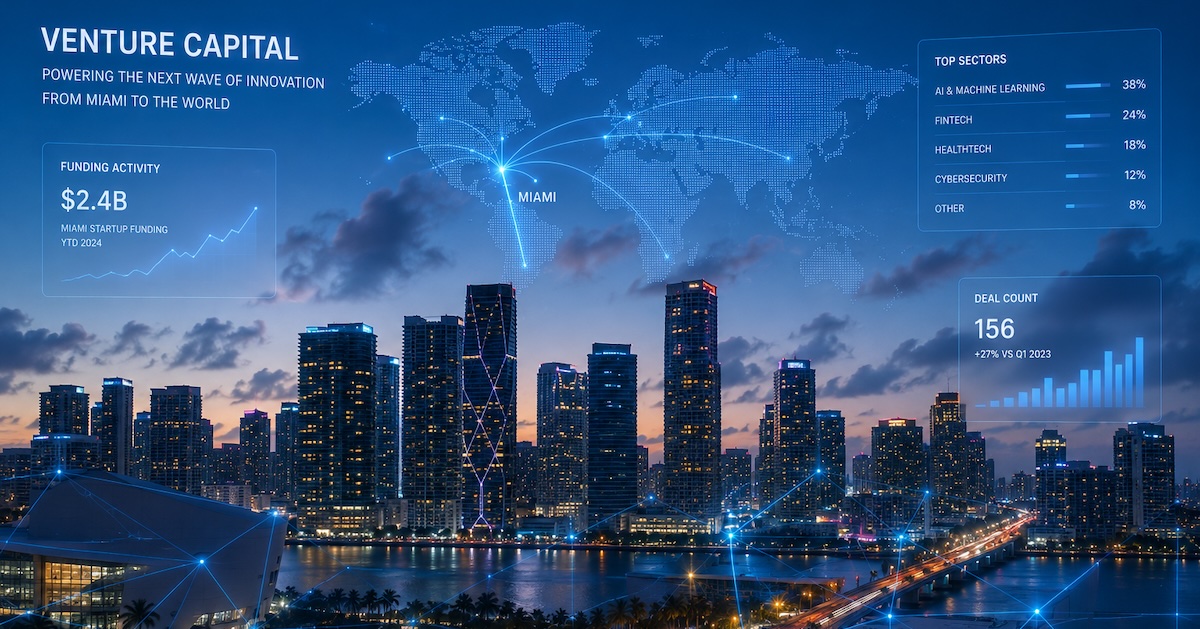
South Florida does not have an Nvidia or Navitas headquartered locally, but the distinction matters for Miami's growing investment community.
The region's venture capital firms, family offices and angel investors increasingly have exposure to AI through startups, funds and public markets. As that exposure broadens into semiconductors, infrastructure and other AI-adjacent businesses, understanding where the economic value is actually being captured becomes increasingly important.
The lesson from Nvidia and Navitas is straightforward: being part of the AI supply chain is not the same as being a major financial beneficiary of it.
For Miami investors evaluating AI hardware opportunities, revenue growth, customer concentration, competitive positioning and the company's actual role in the infrastructure stack may ultimately tell them more than the AI label attached to the business.