The AI industry's biggest constraint isn't talent.
It isn't software.
It isn't even chips.
It's access to those chips.
That shortage has created one of the fastest-growing sectors in AI infrastructure: the rise of the "neocloud."
Unlike Amazon Web Services, Microsoft Azure or Google Cloud, neocloud providers focus almost entirely on one business—leasing large clusters of Nvidia GPUs to companies building and deploying AI models.
As demand for computing power continues to outstrip supply, these specialist providers are becoming an increasingly important part of the AI ecosystem.
Why Neoclouds Are Growing So Quickly
Traditional cloud providers support millions of customers running every type of workload imaginable.
Neoclouds take a different approach.
Their infrastructure is purpose-built for AI training and inference, allowing them to deploy GPU capacity quickly and efficiently for customers that need immediate access to high-performance computing.
Companies such as CoreWeave, Lambda and Crusoe have grown rapidly by targeting this specific market, attracting billions of dollars in investment along the way.
"As compute becomes AI's most valuable resource, the companies controlling access to GPUs are becoming as strategically important as the companies building the models themselves."
Financing AI's Compute Boom
Building GPU infrastructure is expensive.
Rather than relying solely on venture capital, many neocloud providers are financing expansion through debt, using Nvidia GPU assets as collateral.
That approach enables faster growth but also creates new financial risks.
If AI demand slows or newer chip generations quickly replace existing hardware, today's valuable GPU fleets could depreciate faster than lenders and investors expect.
It's a reminder that AI infrastructure isn't only a technology story—it's increasingly a capital markets story as well.
A Business Built on Scarcity
The neocloud model depends on one central assumption: GPU demand will remain higher than available supply.
For now, that assumption appears well supported.
AI developers continue reporting long wait times for high-end GPU capacity, while enterprises deploying generative AI applications are placing growing pressure on cloud infrastructure.
As long as demand exceeds supply, specialist providers can command premium pricing and expand aggressively.
The challenge comes if the market eventually balances or new hardware significantly changes the economics of AI computing.
The Bigger Picture
Neoclouds illustrate how AI infrastructure is becoming more specialized.
Rather than relying exclusively on the major hyperscalers, companies now have alternative providers focused entirely on AI workloads.
That diversification could improve access to compute for startups and enterprises while introducing a new class of infrastructure companies into the AI economy.
It also shifts attention toward a broader question: who controls the compute powering artificial intelligence?
Increasingly, the answer extends beyond Big Tech.
What This Means for Miami
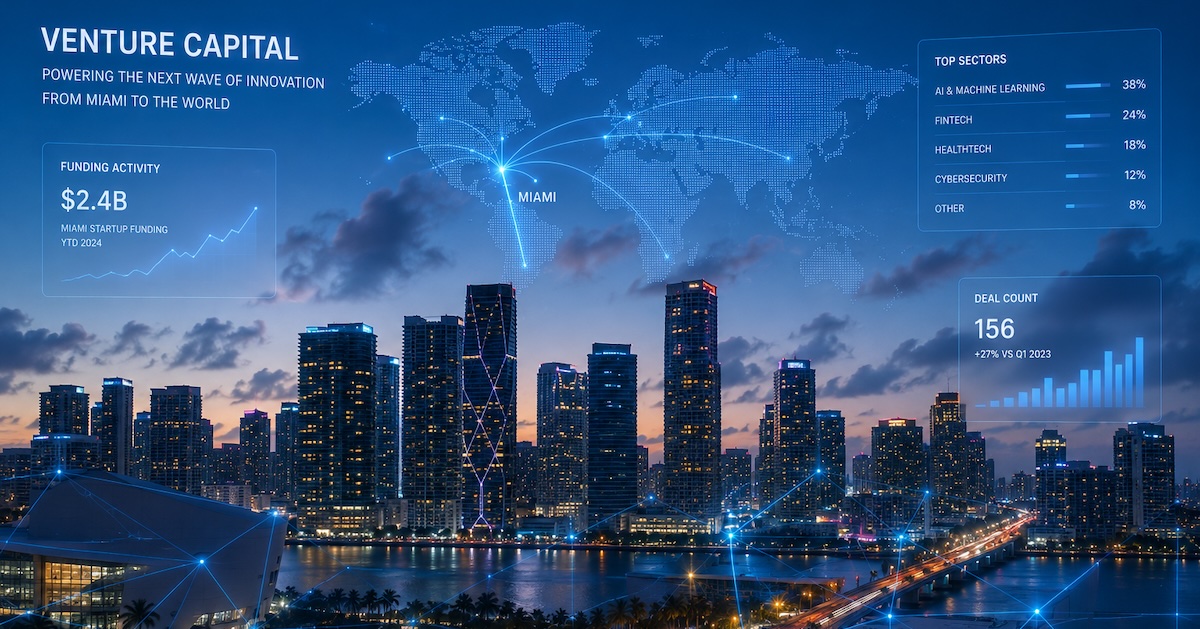
South Florida may not be home to a major neocloud provider today, but the trend still matters for the region's growing AI ecosystem.
Miami startups developing AI applications in fintech, healthcare and logistics increasingly depend on reliable access to GPU infrastructure. Specialized providers could offer faster deployment and more flexible options than waiting for capacity from the largest cloud platforms.
For Miami's investors and family offices, neoclouds represent a different kind of AI opportunity—one tied to infrastructure, financing and physical assets rather than software alone.
As the region continues building its AI economy, access to affordable, scalable compute may become just as important as access to talent or venture capital.