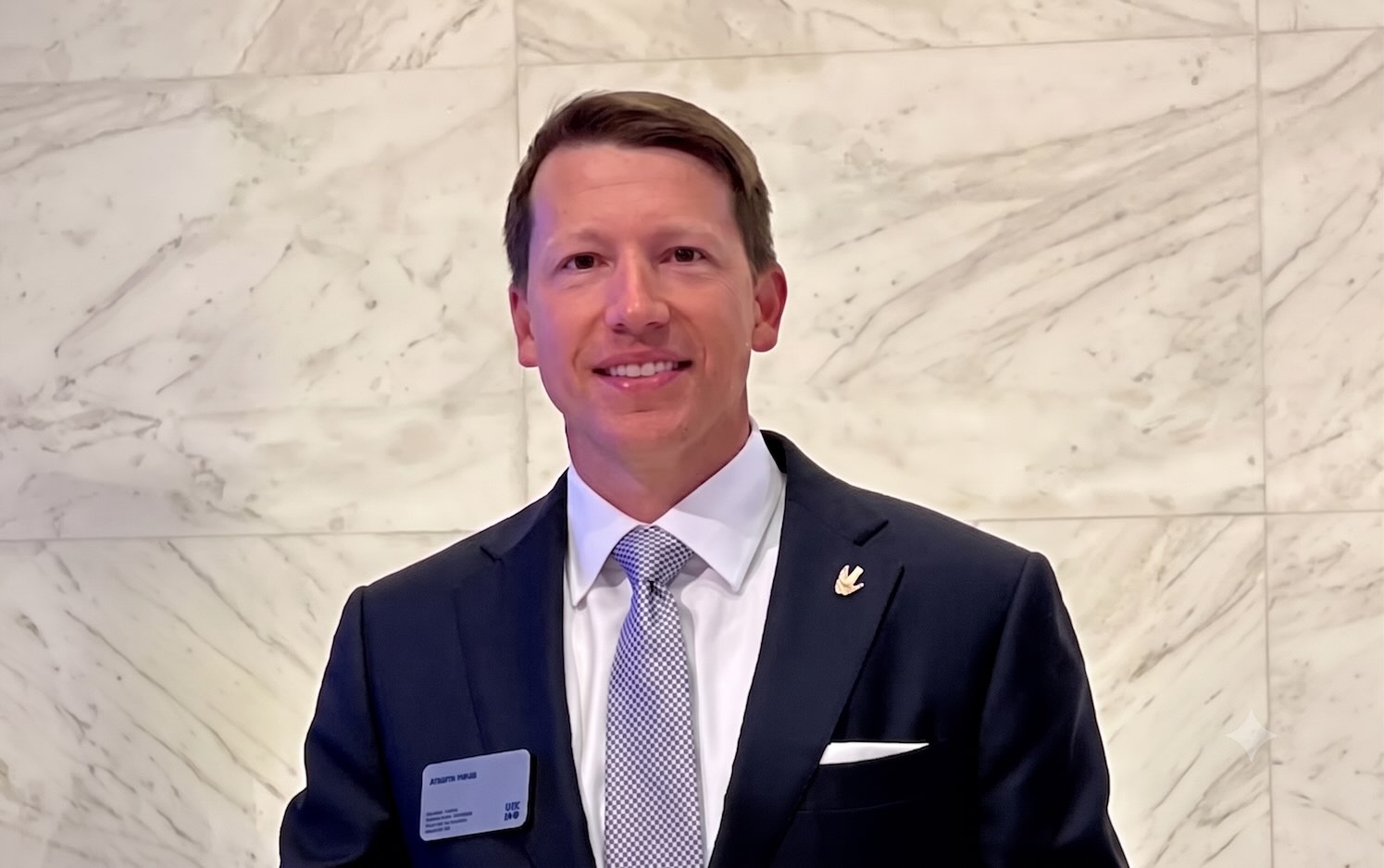
Joshua Siegel invests where most Miami pitch decks fall apart. That’s after seed, before Series A, when a founder has to prove the revenue is real, not just present.
Siegel is General Partner at Acronym Venture Capital. The fund backs enterprise SaaS and omni-channel consumer brands from offices in New York and Palm Beach. Acronym invests at what Siegel calls the “tweener” stage. That means companies with at least $1 million in ARR who haven’t yet raised a Series A.
This is part of a peer-to-peer series of conversations MAIN runs exclusively with Miami’s AI founders, investors and leaders. We asked Siegel a handful of questions in writing. His answers, lightly edited for length, are below.
What’s the most common reason you pass on a Miami startup?
“We invest at the ‘tweener’ stage where companies should have already achieved at least $1 million in actual ARR. But there is more to it than just a headline number. We also look at the margins, customer concentration risk, sales cycle, payback period, LTV, CAC, customer success costs. We have to be sure that the revenue is from the startup’s ideal customers, not just random or legacy customers.”
The last deal Siegel said yes to cleared that bar specifically. It was a Miami company with $1 million in ARR built entirely on customers it could point to and replicate. The team also had real contacts in the space.
Where is Miami’s capital access genuinely improving, and where is it still theater?
“It’s actually growing in the later stage sector, since there are more successful fund managers now in Miami and a lot more capital markets investors that want pre-IPO access. As for pre-seed and seed funding, there are certainly more funds around, but it is limited. Angel dollars are a whole other problem area. There just isn’t enough organization around angel investors.”
That gap between late-stage momentum and early-stage disorganization is the part of Miami’s pitch that doesn’t make the panel slides.
What should a founder do in the 90 days before raising their first institutional round?
“Get ready. Founders need the right lawyer, financials in shape, clear sales materials, and an ideal customer profile, because investors want to know you know who you’re going after. The next thing is to really know how much you need and where it will get you in a reasonable amount of time.”
Bad financials kill a deal every time, Siegel said. So does a founder who can’t say precisely who buys from them and why.
Siegel will sit on a Fort Lauderdale Tech Meetup panel October 13. His answer to what he hopes someone asks him there doubles as his real filter.
“Everyone worries too much about TAM. TAM is a misnomer since almost anything we do has a big enough TAM. I would rather a founder show me specifically their next 100 to 200 customers that pay $100,000 in ACV. I’ll help them get there, but knowing exactly who buys your product makes you more efficient.”
That’s the same discipline running under every answer above. Not whether the market is big. Whether the founder in front of him can name the next 100 people who will actually pay.
Joshua B. Siegel is General Partner at Acronym Venture Capital | Twitter | Linkedin. Offices in New York City & Palm Beach.