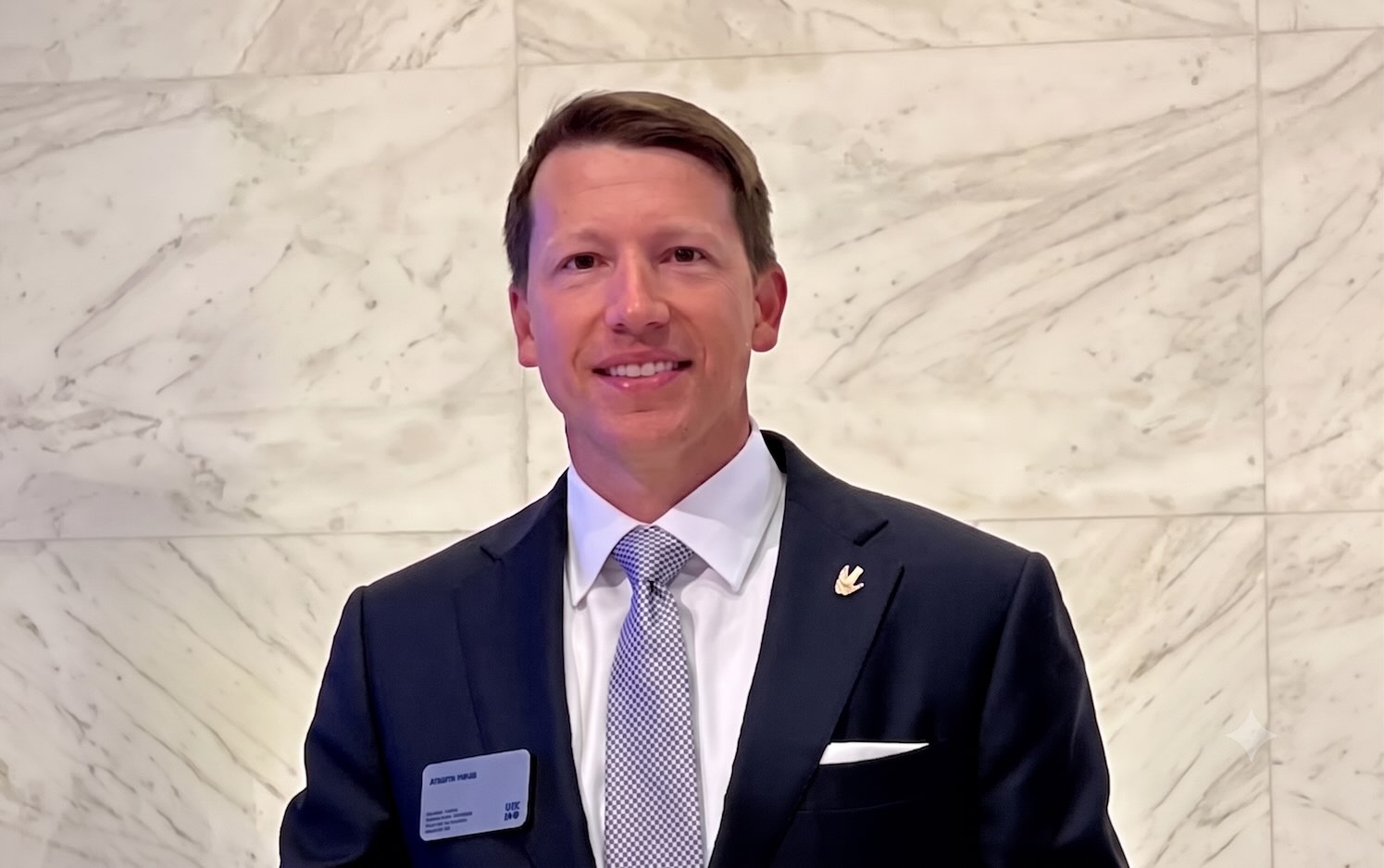
Joe Roos is CIO at ZFO, a New York-based single family office with South Florida roots.
His local portfolio includes Maestro, Fit:Match and 776 Fund. Three very different Miami startups, one pattern in how they got to yes.
ZFO itself invests thematically, in areas it expects to matter for at least a decade. That list includes vertical AI, humanoid robotics, nuclear, quantum and longevity.
Key Takeaways:
- Cold outreach rarely works. Warm intros through mutual connections are the only reliable path.
- Thematic investors (vertical AI, robotics, nuclear, quantum) ignore off-thesis pitches instantly.
- South Florida founders run "episodic" fundraising that kills urgency. Treat it as a managed process instead.
- At pre-seed, only team quality and problem size matter, not revenue or demos.
- Miami's advantage is customer proximity in fintech, real estate, healthcare and LatAm commerce.
This is part of a peer-to-peer series of conversations MAIN runs exclusively with Miami's AI founders, investors and leaders.
"How do I get funding for my Miami startup?" So many founders have this firmly in mind. Roos's answer starts with a harder question: why should an investor reply to your cold email at all?
How Do I Get Funding for My Startup in Miami?
We asked Roos five questions by email. His answers, lightly trimmed for length, are below.
When a Miami-Fort Lauderdale founder cold-emails you, what makes you reply, and what kills it instantly?
"Given the volume of unsolicited inbounds I only reply to founders who have taken the time to review my investment mandates and provide a compelling reason to engage. We tend to be thematic investors allocating to themes that we think will persist for at least the next decade such as vertical AI, humanoid robotics, nuclear, and quantum, so if you pitch me a film finance or LA based restaurant opportunity you likely won't get a response because it means you didn't spend the time understanding our investment focus prior to reaching out."
"It's generally understood across the industry that most cold outreach deals do not get funded, so always try to find a warm intro through mutual connections if possible. Also make sure that your pitch addresses the following: What are you building? For whom? Why now? Why are you the right person to solve it? The strongest emails are specific enough that I can form an initial view in thirty seconds, so also include stage, round size, lead investor (if applicable), traction, etc."
"Vague emails, a mass-mail tone, inflated claims, etc. instantly kill the pitch."
What did the last deal you said yes to look like?
"We recently made our third investment in Valar Atomics, an advanced nuclear startup building mass-manufactured, high-temperature gas reactors designed to provide low-cost, always-on power and industrial heat at massive 'gigasites,' as part of their Series B round led by Sequoia Capital. The original investment was done in mid-2025 and was sourced through a trusted contact within our robust proprietary deal flow network..."
"Most of the local South Florida investments that I have made, as an angel investor, into companies like Maestro, Fit:Match, 776 Fund, Meta4, etc. were also sourced through my network and were thesis driven, backed by founders who I thought were uniquely positioned to solve important issues."
What's the most common mistake South Florida founders make when fundraising that founders elsewhere don't make?
"Despite South Florida making tremendous progress, it is still an exceedingly difficult place to raise capital on a relative basis. For example, about 25% of VC backed companies come out of the Bay Area compared to only 3% for Miami. In recent times, 52% of VC dollars have gone to Bay Area based start-ups while Miami start-ups received less than 1%. This means that Florida founders need to start building potential funding relationships long before they actually need the capital. They should be out attending events hosted by eMerge Americas, Fort Lauderdale Tech Meetup, etc. and trying to meet angel investors, family offices, and other creative sources of capital."
"I find that South Florida founders, in general, run more episodic fundraising strategies that stretch over very extended periods of time, which diminishes urgency and even FOMO that can be associated with early-stage deals. Strong fundraising is a managed process: a targeted list of sector focused funds, consistent outreach, disciplined follow-up, a current data room and enough runway to preserve negotiating leverage."
Pre-seed in Miami right now: what proof do you need to see before traction?
"At the pre-seed stage all that matters is the quality of the founding team and the size of the problem they are trying to solve, because there usually isn't enough traction to underwrite the business in a more meaningful way. The ideal founder is someone who has identified a potential product or solution for a problem that they have experienced directly. Identifying promising founders is very much about pattern recognition, domain expertise, and the belief that what the founder is building is more important, to them, than anything else in the world. Why else would a founder pursue something that is statistically destined to fail while earning a below market salary and getting punched in the face every day?"
"Maestro is a perfect example of a pre-seed company I invested in, because the founder had 20+ years of mortgage industry domain expertise, had previously built and sold a mortgage fintech company to RE/MAX, and was the perfect balance of 'crazy.' At pre-seed I don't need revenue, LOIs, or even a working demo, but I do need a founding team that I believe can build something that is worth 100x more in the future than it is today."
Miami vs. raising in SF or New York: when is staying local an advantage, and when should a founder get on a plane?
"Staying local is an advantage to the extent that proximity to customers in real estate, fintech, hospitality, wealth management, logistics, healthcare and/or Latin American commerce brings a strategic advantage. It may mean local talent, a regulatory relationship or a dense group of strategic network partners. In those cases, Miami can serve as the perfect location to accelerate go-to-market and scale beyond to adjacent markets."
"With that said, fundraising is a numbers game, and it is important to cast a wide net while focusing on investors whose mandates meet your capital needs. Founders should get on a plane when the capital, talent or customer concentration they need is somewhere else, but given how remote everything is these days, you can absolutely build a world class tech business in South Florida."
Roos's own numbers are the argument. A quarter of VC-backed companies come out of the Bay Area, against 3% for Miami startups. The gap in dollars is wider still.
His advice isn't to wait for that to change. It's to start building the relationships months before a founder needs the check.
Don't treat startup funding as something you fit in when there's time. It's a process you run before you need it.