Investors chasing "AI exposure" often lump companies together that have almost nothing in common financially.
Arista Networks and Arm Holdings are a good example.
Both get mentioned constantly in AI investment conversations. Both have benefited from the massive buildout of data center infrastructure needed to train and run large AI models.
But the way each company actually makes money, and how that money grows, looks very different.
Arista Networks sells networking switches and software that move data between servers inside massive data centers, including facilities being built by hyperscalers such as Meta and Microsoft.
Arm Holdings licenses chip architecture that appears in everything from smartphones to AI accelerators, collecting licensing fees and royalties rather than selling hardware directly.
That distinction shapes how each company's growth shows up on paper.
Two Different Monetization Engines
Arista's revenue is closely linked to data center capital spending.
When hyperscalers increase AI infrastructure budgets, Arista can benefit directly because its networking equipment is part of the infrastructure connecting servers and accelerators inside those facilities.
Arm's model works differently.
It earns licensing fees when customers adopt its architectures and royalties when chips based on those designs are shipped.
That gives Arm exposure to a much broader semiconductor ecosystem, including companies such as Nvidia, Qualcomm and Apple, rather than tying its revenue primarily to individual data center construction cycles.
One is a relatively direct beneficiary of AI capital expenditure.
The other benefits from the spread of its architecture across a broader chip market.
That difference matters when investors value the two companies.
Why The Growth Comparison Matters Right Now
AI infrastructure spending has become one of the dominant investment themes of the past several years, with major cloud companies committing enormous sums to data centers and computing capacity.
Companies positioned directly in that spending path, such as Arista, can see demand accelerate as hyperscalers expand their infrastructure.
Arm's growth story is more diffuse.
It can benefit as semiconductor companies incorporate Arm-based designs into AI accelerators, edge devices and other products, but its royalty model means the financial impact depends on adoption across a broad customer base and the eventual shipment of products incorporating its technology.
Neither model is inherently better.
They simply expose investors to different parts of the AI growth cycle.
Arista has more direct exposure to hyperscaler infrastructure spending. Arm offers broader exposure to semiconductor architecture adoption across multiple markets.
That creates different risk profiles.
If hyperscalers slow their capital spending, companies directly supplying data center infrastructure can feel the impact relatively quickly.
Arm's diversified licensing and royalty model can provide a different kind of exposure, but its growth is tied to longer product cycles and the adoption of its architecture across many customers and applications.
A Signal For The Broader AI Trade
The Arista-Arm comparison reflects a bigger tension in AI infrastructure investing.
Some companies are positioned directly in the current capital-spending cycle.
Others are positioned to benefit as AI adoption spreads across industries, devices and computing architectures over a much longer period.
That distinction becomes increasingly important as investors ask how long the current AI infrastructure spending cycle can continue at its present pace.
A company selling networking equipment into today's data center expansion is making a different economic bet from one collecting royalties as its architecture becomes embedded across the semiconductor industry.
Both can benefit from AI.
But they don't require AI spending to evolve in exactly the same way.
For investors, that distinction can be more useful than simply asking whether a company is an "AI stock."
What This Means For Miami
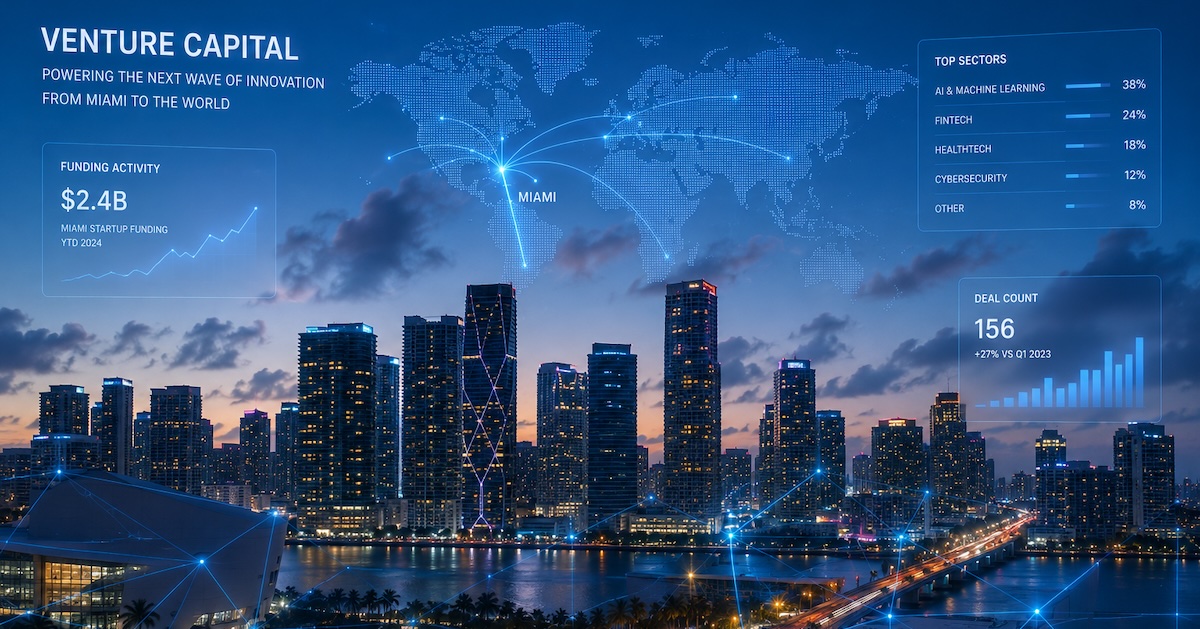
South Florida doesn't have a major semiconductor or networking hardware base, but the Arista-Arm comparison still matters for local investors and technology executives tracking AI infrastructure exposure.
Miami's growing fintech and enterprise software sectors increasingly depend on cloud infrastructure built on this underlying hardware.
Understanding which companies profit directly from AI capital expenditure and which benefit from longer-term semiconductor adoption gives investors, family offices and venture funds a clearer framework for evaluating AI-adjacent opportunities.
As Miami continues positioning itself as a technology and finance hub, that distinction may become increasingly useful.
The AI trade isn't one trade.
There are companies selling the infrastructure, companies supplying the components, companies licensing the underlying architecture and companies building applications on top.
Understanding where a business actually sits in that chain may matter more than the AI label attached to its stock.