AI infrastructure is becoming one of the biggest businesses created by the AI boom, and CoreWeave's latest results show just how fast it is expanding.
The AI cloud provider reported $2.58 billion in second-quarter revenue, up 112% from a year earlier and slightly ahead of Wall Street expectations. Its shares jumped 14% in after-hours trading following the results.
More striking is the demand sitting behind those numbers. CoreWeave ended the quarter with a $104 billion revenue backlog, while the company said it had more than $25 billion in additional commitments during the third quarter.
The numbers suggest that businesses building AI systems are still hungry for computing capacity.
But they also show why the AI infrastructure boom is becoming a complicated economic story.
The Demand Is Real
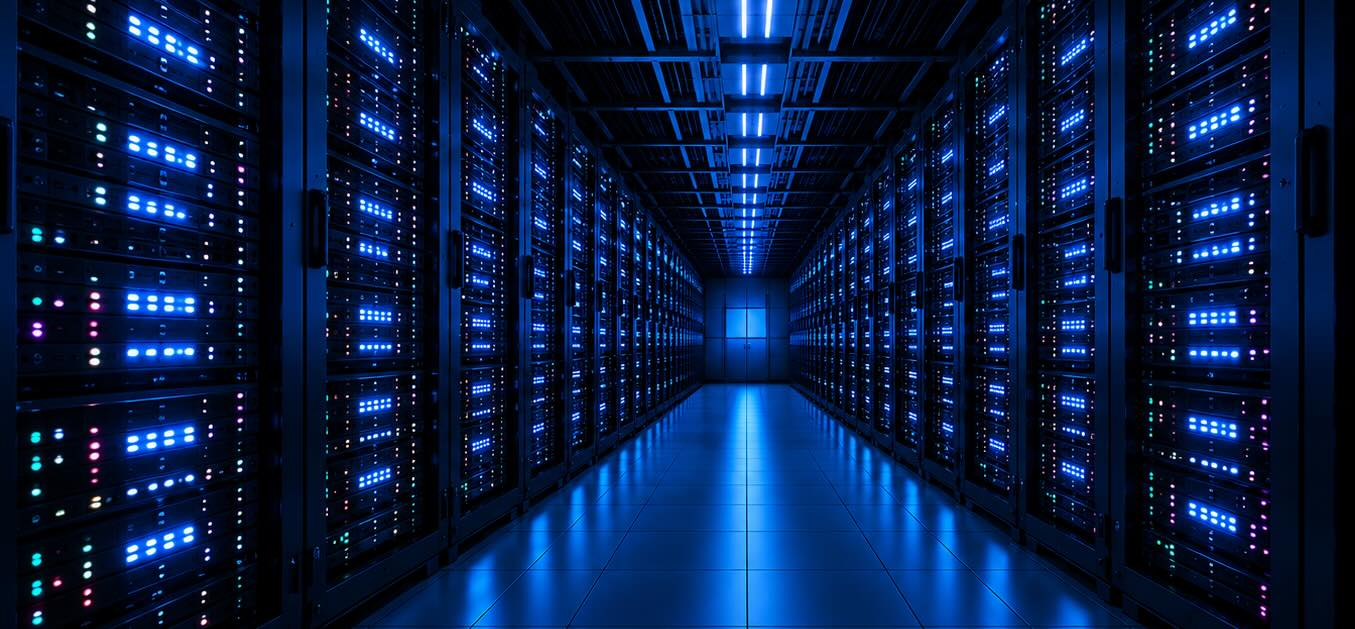
CoreWeave's business is relatively straightforward: it operates data centers packed with Nvidia GPUs and rents that computing capacity to companies running AI workloads.
The company is competing with much larger cloud providers including Amazon, Google and Microsoft, but demand has been strong enough for CoreWeave to continue expanding rapidly.
Management expects third-quarter revenue of $3.4 billion to $3.6 billion, which would represent roughly 158% growth at the midpoint of the range.
For the full year, CoreWeave now expects between $12.4 billion and $13.2 billion in revenue.
The company also expects to have more than 1.85 gigawatts of active power by the end of 2026.
Those figures illustrate the physical scale of the AI buildout. AI isn't just consuming software subscriptions and cloud APIs. It is creating enormous demand for electricity, data centers, networking equipment and specialized chips.
The Other Side of the Equation
CoreWeave's growth comes with an enormous capital requirement.
The company expects to spend $35 billion to $39 billion on capital expenditures in 2026, up from its previous forecast of $31 billion to $35 billion.
It also carried $35 billion of debt at the end of the quarter.
And despite the rapid revenue growth, CoreWeave remains unprofitable, reporting a $626 million net loss for the quarter.
That doesn't necessarily invalidate the growth story. The business is effectively spending billions to build infrastructure that it expects customers to use for years.
But it does highlight the central question facing AI infrastructure investors: how much capital is required to turn AI demand into durable profits?
Customers Are Still Spending
For now, CoreWeave has some powerful evidence that demand remains strong.
Meta committed another $21 billion during the quarter. Anthropic has a multiyear agreement with the company, while quantitative trading firm Jane Street committed $6 billion.
CoreWeave also says pricing and margins for its newest Nvidia Blackwell and Vera Rubin systems are reaching new highs.
That is significant because one of the biggest questions surrounding the AI infrastructure trade has been whether rapidly increasing computing supply would eventually push prices and margins down.
So far, CoreWeave says it is seeing the opposite.
The Data Center Problem
There is another constraint that doesn't appear neatly on an income statement: communities increasingly don't want massive data centers built near them.
Opposition to large-scale data-center projects is spreading across the U.S., with concerns ranging from electricity demand and water consumption to land use and local infrastructure.
CoreWeave CEO Michael Intrator acknowledged that resistance is becoming a problem.
“When parts of the U.S. become unwilling to even engage in those conversations, that it becomes more challenging.”
The company says its current financial guidance isn't being affected by regulatory pushback, but the underlying issue is becoming harder for the industry to ignore.
The AI economy needs physical infrastructure. Building that infrastructure requires enormous amounts of capital, power and land. And all three are increasingly contested.
What This Means for Miami
This is particularly relevant to Florida, where hyperscale data-center projects are already generating political opposition and debates over tax incentives, electricity and land use.
CoreWeave's results provide the other side of that argument.
The demand driving these projects isn't hypothetical. Companies are committing billions of dollars to AI computing, and infrastructure providers are reporting rapidly growing revenue and backlogs.
The question for Florida isn't simply whether the state should build more data centers. It's where the economic benefits justify the infrastructure costs, who pays for them and how communities participate in those decisions.
For Miami and South Florida, that makes the data-center debate increasingly relevant to the region's broader AI ambitions. Building an AI economy requires computing infrastructure, but the CoreWeave numbers show just how resource-intensive that infrastructure can become.