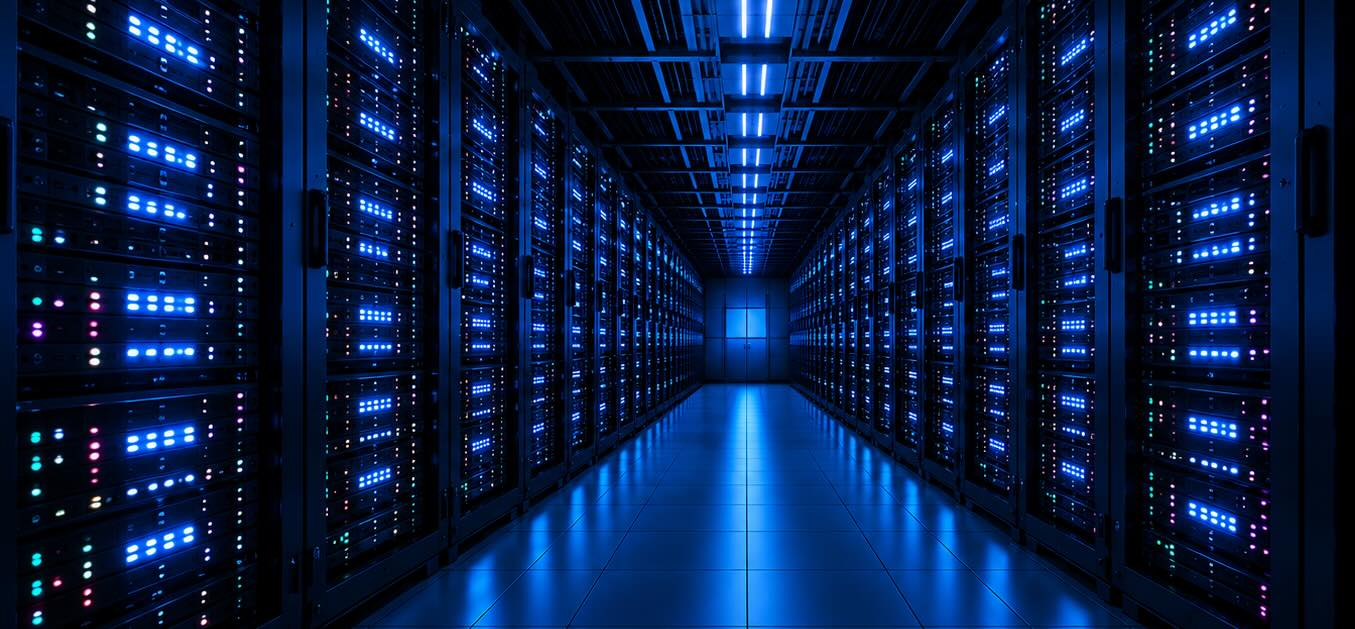
The AI boom is creating an unexpected group of winners:
Old-school manufacturers.
Companies that have little to do with chatbots or AI models are finding themselves at the center of the industry's biggest infrastructure buildout in decades.
Caterpillar, Eaton and Ford are among the manufacturers shifting their businesses to capture demand created by the rapid construction of AI data centers.
And for Caterpillar in particular, the transformation is striking.
Generators Become the AI Gold Rush
Caterpillar's electricity-generator business has become its most profitable segment, overtaking the construction equipment that traditionally defined the company.
The reason is simple: AI data centers consume enormous amounts of electricity.
And they need reliable power.
Caterpillar is investing $725 million to expand generator production at an Indiana plant. It has also converted another Kansas facility to produce turbine engines used by data centers.
The company is even bringing back production of 10-megawatt generators that it stopped making in 2022.
That's a remarkable illustration of how quickly AI is changing industrial demand.
Products that had become less important to manufacturers are suddenly strategic assets.
AI Is Becoming a Manufacturing Story
The broader numbers point in the same direction.
U.S. manufacturing output reached its highest level since 2022 last month, according to the report, with data centers and other AI-related industries helping drive the increase.
That means the AI investment cycle isn't confined to Nvidia, hyperscalers and AI startups.
It is reaching deep into the physical economy.
Data centers need:
Generators
Turbines
Electrical equipment
Cooling systems
Construction equipment
Networking infrastructure
Grid connections
Every new AI facility creates demand for another layer of industrial equipment.
And those requirements can be enormous.
The AI Infrastructure Multiplier
This is one of the more interesting consequences of the current AI boom.
The software may be digital.
The infrastructure isn't.
Building enough computing capacity to support increasingly powerful AI systems requires physical factories, power plants, transmission infrastructure and equipment manufacturers to expand alongside the technology companies.
That creates an AI infrastructure multiplier.
A dollar invested in an AI data center can generate demand far beyond the companies actually operating the servers.
For manufacturers such as Caterpillar, that may represent a major structural shift rather than a temporary sales spike.
What This Means for Miami
Miami is unlikely to become a manufacturing center on the scale of the Midwest, but the implications still matter for South Florida.
The same AI infrastructure boom driving Caterpillar's generator sales is increasing demand for electricity, data centers and supporting infrastructure across the country.
For Miami, that creates a less glamorous but increasingly important part of the AI economy.
The AI race isn't just about who builds the smartest model.
It's also about who can build, power and connect the machines running it.
And increasingly, some of the biggest winners may be companies that were manufacturing heavy equipment long before anyone had heard of ChatGPT.
Reporting Source: This article builds upon reporting from The Wall Street Journal and adds analysis of what the development means for Miami and South Florida.